

06
Home/
Docker Development Company in Poland
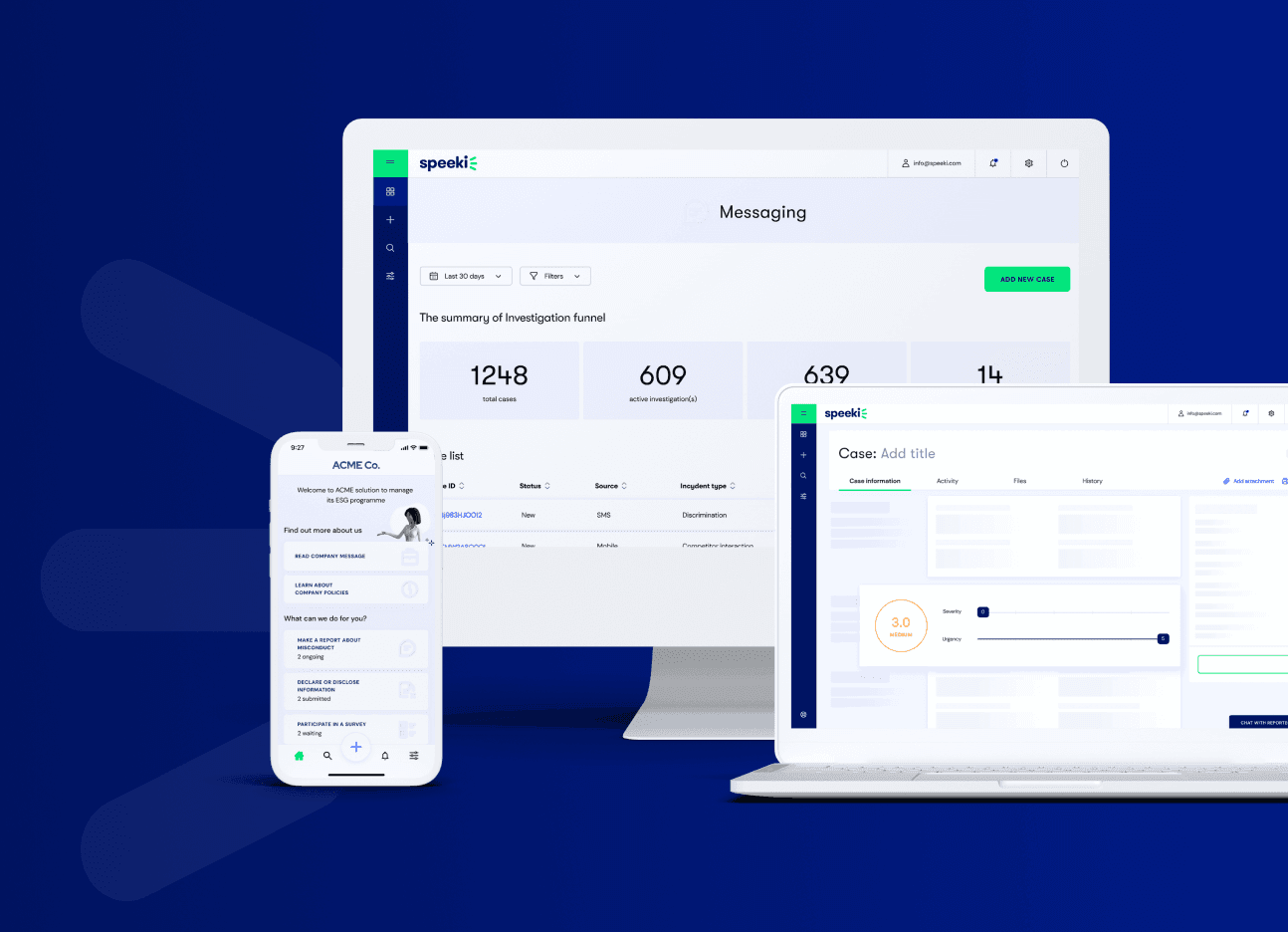
We containerize and deploy applications from our team in Krakow, Poland - Dockerfiles, Compose stacks, and CI/CD pipelines built for real production traffic. It's the same Docker and Kubernetes infrastructure that runs Speeki's platform for 100+ enterprise clients.
01
Latest projects
02
What is docker and why use it for containerized deployments?
Docker is a platform for building, shipping, and running applications inside lightweight, portable containers. Created by Solomon Hykes in 2013 and released as open-source software, Docker packages an application together with everything it needs to run - code, runtime, system libraries, and configuration - so it behaves identically on a developer's laptop, a staging server, and in production. It runs on Linux, macOS, and Windows, and is the de facto standard for containerization across the industry. Docker development is in steady demand in Poland as more teams move existing applications into containers and adopt container-based CI/CD. According to Enlyft's technology-adoption tracking, 267,047 companies use Docker in production, giving it roughly 37% market share among virtualization platforms.
The benefits of choosing Docker for your project
- Environment consistency: the same container image runs identically everywhere, eliminating the classic "works on my machine" problem between development, staging, and production.
- Lightweight isolation: containers share the host OS kernel instead of virtualising an entire machine, so they start in seconds and use a fraction of the resources a traditional VM needs.
- Cross-platform by design: the same Docker image deploys to Linux, macOS, Windows, and every major cloud provider without changes.
- Cost-effective scaling: running more containers on existing hardware is far cheaper than provisioning additional full virtual machines.
- Versioned, rollback-ready images: every build is tagged and stored, so reverting to a known-good version is a redeploy, not a fire drill.
- Orchestration-ready: Docker images are the standard input for Kubernetes, so containerizing an application now keeps orchestration and autoscaling on the table later, without a rewrite.
Want to dive into Dockerization? Let's scale your success
Deploy with confidence as we dockerize your projects, scaling efficiency and flexibility for seamless performance.
03
Full-scope Docker development services
Dockerfile & Image Optimization
We write lean, multi-stage Dockerfiles that keep image sizes small and build times fast - fewer layers, smaller attack surface, quicker deploys.

Docker Compose for Local Development
We set up Compose stacks so your whole team can spin up databases, caches, and services locally with one command, matching production configuration.
CI/CD Pipeline Integration
We wire Docker builds into your CI/CD pipeline - every commit builds, tests, and pushes a versioned image automatically, ready to deploy.
Container Orchestration Readiness
We structure images and manifests so they drop straight into Kubernetes when you're ready to scale - no rework required later.
Security Scanning & Image Hardening
We scan images for known vulnerabilities, strip unnecessary packages, and run containers as non-root by default.
Multi-Environment Configuration
We manage environment-specific configuration (dev, staging, production) through Docker so every environment stays a faithful copy of the next.

Legacy Application Containerization
We take existing, non-containerized applications and package them into Docker step by step, without a risky big-bang rewrite.

Ongoing Support & Infrastructure Monitoring
We keep containerized infrastructure healthy after launch - monitoring resource usage, patching base images, and tuning autoscaling rules.
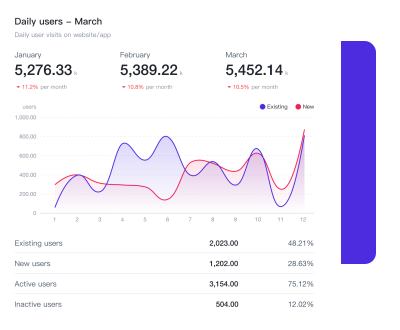
This is the same containerized, autoscaling infrastructure we run in production: Docker images orchestrated with Kubernetes, deployed through CI/CD pipelines that build, test, and ship on every change. It's the setup behind Speeki's platform, now serving 100+ enterprise clients under continuous ISO audit - built to absorb traffic spikes without turning into downtime.
04
Why choose Dev and Deliver as your Docker development partner

Infrastructure that's run for years
Speeki has run on our Docker and Kubernetes infrastructure for 5+ years, scaling from a single feature to a platform serving 100+ enterprise clients under continuous ISO audit.

Right-sized infrastructure, not over-engineering
Not every project needs a Kubernetes cluster on day one. We containerize first, and only add orchestration when the traffic or team size actually calls for it.

A full-stack team, not just DevOps
The same engineers who containerize your app also build it - in Node.js, NestJS, and React - so infrastructure decisions are made with the application's real needs in mind, not in isolation.

Scanned and tested before it ships
Every image goes through automated tests and vulnerability scanning in CI before it ships, backed by the same pipelines that keep Speeki's platform passing its ISO audits.
05
How our Docker development team is built and managed
A Docker engagement is usually staffed lean: one or two backend engineers who own the containerization and CI/CD setup, working directly with whoever already owns the application code. For larger, orchestration-heavy projects, a DevOps-focused engineer joins to handle Kubernetes manifests, scaling rules, and monitoring.
A project manager keeps the containerization work sequenced against the rest of the release schedule, so infrastructure changes never block a feature deadline. Every Dockerfile and CI/CD change goes through the same review process as application code.
Get started with Docker - containerize your application with a team that knows the full stack
Whether you're containerizing a legacy application for the first time, tightening up a Dockerfile that's grown unwieldy, or building the CI/CD pipeline that ships every container automatically - we'll help you get the setup right the first time. Let's talk about your infrastructure.
Want to light up your ideas with us?
Kickstart your new project with us in just 1 step!
Prefer to call or write a traditional e-mail?